One Year After Dr Pious Nyandoro: The Uncomfortable Truth About Empire, Borders and the Value of Black Life
One Year After Dr Pious Nyandoro: The Uncomfortable Truth About Empire, Borders and the Value of Black Life
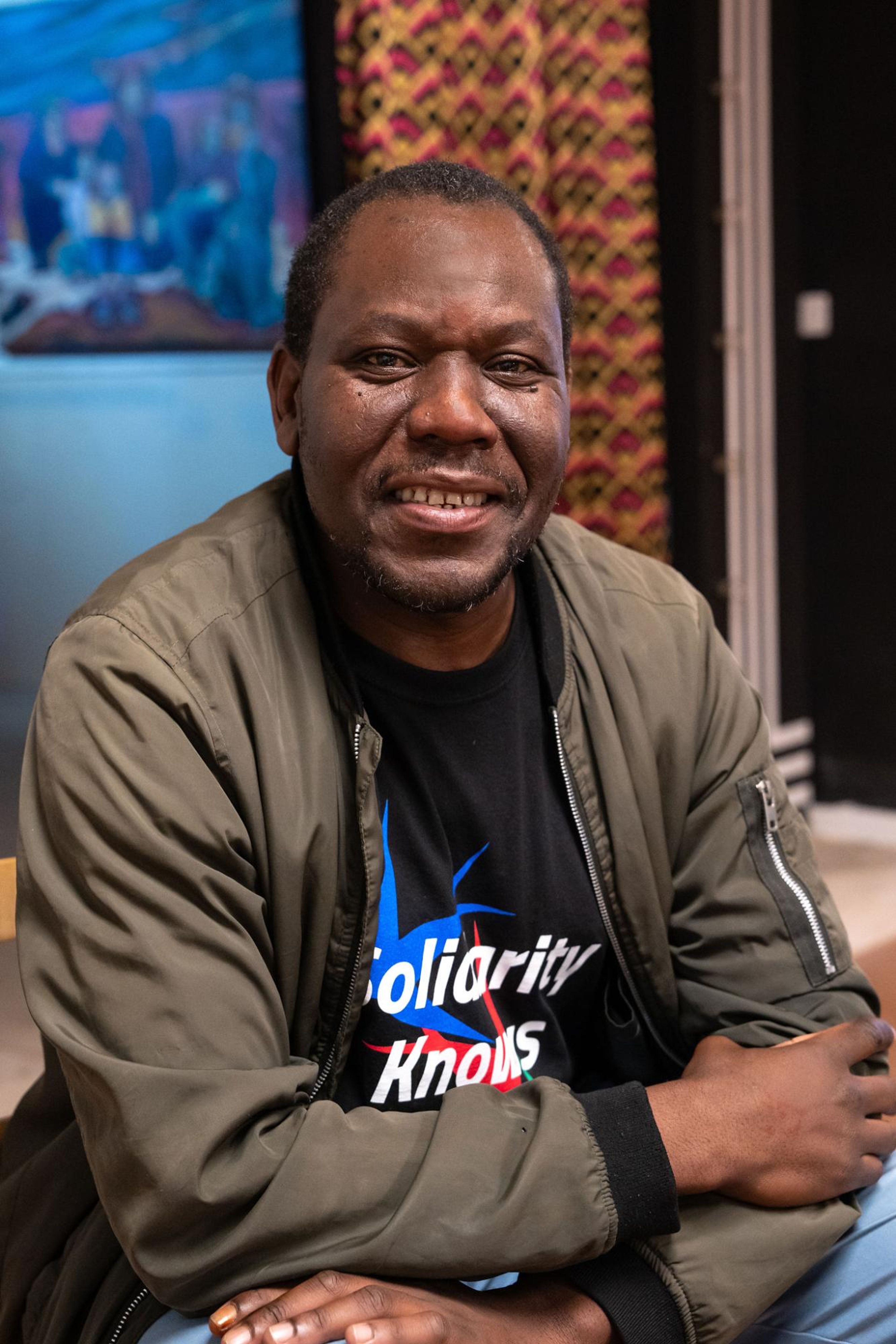
As we approach the unimaginable and unbearable first anniversary of the transitioning of our late Comrade, Dr Pious Nyandoro, we are called not only to mourn the loss of an extraordinary Pan-African scholar, organiser and freedom fighter, but also to confront the political conditions that shaped his life and, ultimately, his death.
Too often, discussions about migration begin and end at Europe's borders. Distressing images of lifeless bodies on the shores, of overcrowded boats, detention centres and refugee camps dominate public consciousness, as though a psychopathic and sociopathic media landscape reinforced by Eurocentric political, academic and public discourse feeds on the dehumanisation of racialised others. These spectacles reduce human beings to crises to be managed/securitised, threats to be contained or objects of humanitarian policy prescription. Yet such representations conceal a far deeper and sinister reality. They are symptoms of a global political and economic architecture that continues to render racialised communities, systematically invisible except when they are framed as problems of security, charity or border control
The epistemic erasure and dehumanising imperial narratives that define Fortress Europe do not simply justify exclusion at its borders; they also normalise the unequal value assigned to human life and death. They encourage us to mourn selectively, to recognise some deaths as tragic while treating others as inevitable consequences of migration. In doing so, they strip away the histories that produced forced displacement in the first place.
This raises uncomfortable questions.
How did we, as colonised people, from across the Global South and the diaspora, come to accept that our collective humanity should be measured according to neocolonial standards established by the very empire that enslaved and constricted our peoples, partitioned our lands, extracted and continues to extract our resources, and continues to profit from ecological destruction and economic dependency? How has Europe succeeded in presenting itself as the global guardian of democracy and human rights while simultaneously operating one of the world's most repressive, hostile immigration regimes?
These contradictions cannot be understood without acknowledging the enduring structures of empire.
Colonialism was never simply a historical event. Its political, economic and ideological infrastructures continue to shape international relations, global finance, migration governance and racial hierarchies. The violence has changed form, but not its underlying logic. Borders and bordering have become contemporary instruments through which colonial power is reproduced, determining whose mobility is celebrated and whose movement is criminalised. More profoundly, these systems shape the very language through which migration is understood, the knowledge that is legitimised, and the methodologies and narratives that define our collective resistance. In doing so, they narrow the political imagination, encouraging us to manage the consequences of coloniality rather than confront and dismantle the structures that continue to produce displacement, inequality and racialised exclusion.
Our Brother, Comrade Dr Pious Nyandoro understood this reality deeply.
He rejected the language of victimhood and instead spoke of FreedomSeeking, a political philosophy that understood migration not merely as displacement but as resistance against systems that have rendered many Global South nations economically and politically non-viable through centuries of colonial extraction, unequal exchange and structural dependency.
For him, migration was not evidence of failure on the part of migrants. It was evidence of a world order that continues to deny millions the conditions necessary to live with dignity in their countries of origin.
One year after his passing, that analysis is more urgent than ever.
His death should not be interpreted as an isolated tragedy. It demands that we examine the cumulative violence embedded within systems that expose displaced people to prolonged precarity and uncertainty, exclusion and racialised dehumanisation. It challenges those of us working within migration, humanitarian and refugee support sectors to ask difficult questions about our own institutional biases.
Have we become so institutionalised in the management of suffering that we no longer recognise the need to challenge the political systems that drive and perpetuate it?
Has service delivery, however essential, unintentionally become a substitute for justice?
These questions are not an indictment of individuals who dedicate their lives to supporting displaced communities. Rather, they are an invitation to reflect critically on whether humanitarian responses can ever substitute for political transformation.
Dr Nyandoro repeatedly reminded us that solidarity must never be mistaken for liberation.
His death also exposes another uncomfortable reality: even in death, racialised bodies remain entangled within economies of extraction. The commodification surrounding migration, detention, deportation and even repatriation reflects broader structures in which Black and racialised lives continue to generate value for systems built upon inequality.
History offers painful reminders.
Patrice Lumumba and countless other martyrs of African liberation struggled not merely against colonial administrations but against global systems designed to preserve racial hierarchy long after formal independence. Many sacrificed their lives so future generations might live with dignity, only for contemporary societies to reduce their struggles to symbolic diversity initiatives while leaving the underlying structures of inequality intact.
Empire has never disappeared. It has adapted. Today it speaks the language of border security, migration management, development assistance and humanitarian intervention. Yet beneath this vocabulary lies a familiar political logic: preserving unequal relations of power between the Global North and the Global South.
Remembering Dr Pious Nyandoro therefore requires more than commemorative speeches or moments of silence. It requires honesty.
It requires acknowledging that Europe's constitutional and ideological foundations remain profoundly shaped by the afterlives of empire. It requires recognising that hostile immigration policies are not policy failures but political choices rooted in long histories of racial ordering. And it requires rejecting narratives that portray forced displacement as an individual problem rather than a structural consequence of coloniality, global inequality and environmental destruction.
Most importantly, it requires us to continue the work to which our Comrade Dr Nyandoro devoted his life: truth-telling, political education and collective resistance.
His legacy reminds us that FreedomSeeking is not simply about crossing borders. It is about challenging the conditions that make borders instruments of racial domination in the first place.
One year on, our responsibility is not simply to remember our comrade.
It is to lift the lid on uncomfortable truths, refuse the normalisation of injustice and continue building movements that place justice, not charity, at the centre of migration politics.
Only then can we begin to honour both his life and the countless others whose humanity continues to be denied by a world that has yet to reckon honestly with the enduring legacy of empire.
Related Articles
RJN Statement on the Transitioning of Professor Jason Arday
24/08/2026 • RJN Team
Press release: Afro-Diasporic Futures: Black Women’s Leadership Across the Atlantic
04/05/2026 • Iris Dixon