Kenya’s ongoing uprising: An analysis of the Gen Z movement and its anti-colonial struggle
The Kenya Gen Z movement represents one of the most significant youth-led uprisings in contemporary African history, evolving from tax protests into a comprehensive challenge to neo-colonial structures and authoritarian governance. What began as opposition to the Finance Bill 2024 has transformed into a sustained movement demanding fundamental systemic change.
The spark that ignited a generation
On June 18, 2024, Kenya’s youth took to the streets in response to the Finance Bill 2024, which proposed the largest tax increases in the nation’s history—KES 346 billion ($2.7 billion), a 43% increase from the previous year. The bill targeted essential goods with a 16% VAT on bread, 25% excise duty on vegetable oil, and new taxes on diapers, smartphones, and mobile money transfers. For a population where 75% are under 35 and youth unemployment reaches 67%, these measures represented an unbearable burden.
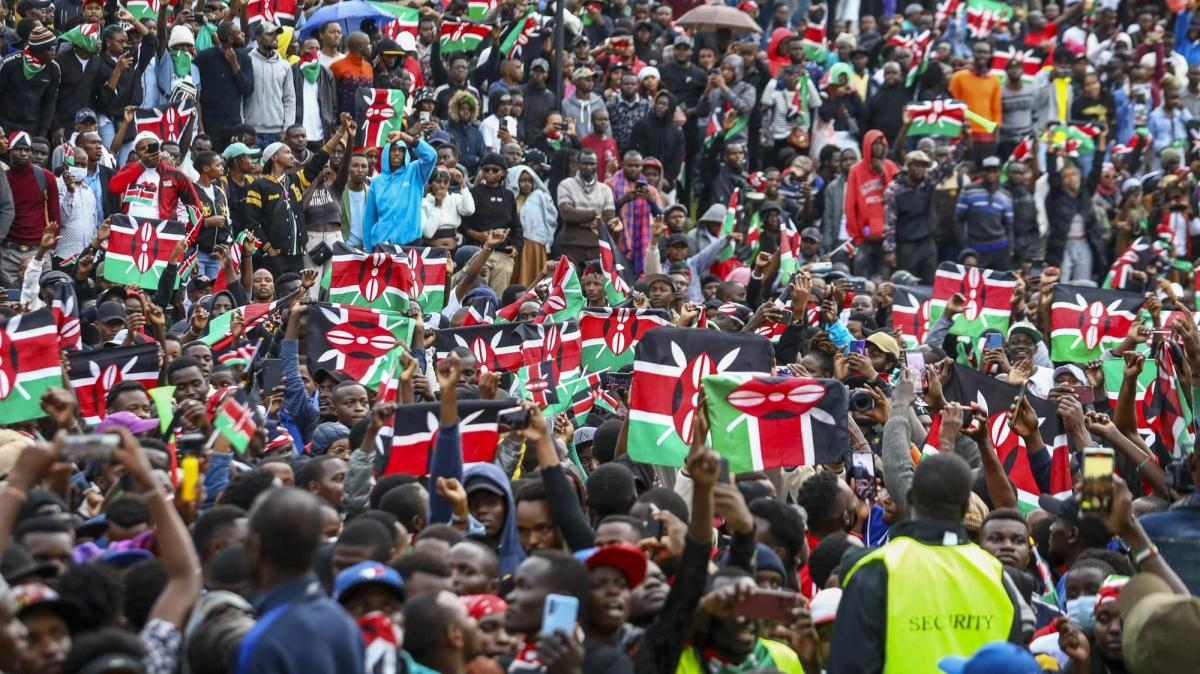
The protests reached a historic climax on June 25, 2024, when thousands of protesters stormed Parliament—the first time in Kenya’s history. That day alone, police killed over 60 protesters using live ammunition, marking the bloodiest day of civic action in recent memory. Among the victims was Rex Kanyike Masai, whose death on June 20 had already galvanized the movement. The youngest victim was 12-year-old Kennedy Onyango, shot while borrowing a book, his death from a long-range bullet wound exemplifying the indiscriminate nature of state violence.
Evolution from economic protest to anti-colonial resistance
The movement’s demands quickly evolved beyond the initial #RejectFinanceBill2024 to encompass broader systemic issues. As political analyst Njeru Kathangu observed, “The spirit of Saba Saba was to push for freedoms and democracy, the spirit of this Saba Saba is to push for survival.” This evolution reflects protesters’ understanding that their economic struggles stem from deeper colonial structures that persist in contemporary Kenya.
The police system exemplifies this colonial continuity. Research shows Kenya’s police “operate more as an occupying force and extension of the elite than a public service”—a system rooted in colonial violence that has proven “stubbornly resistant to reform.” The systematic use of torture, enforced disappearances, and extrajudicial killings mirrors colonial-era tactics of population control. As of July 2025, 26 people remain missing from the protests, with only 2 of 22 death investigations reaching court, demonstrating complete impunity for state violence.
The July 2025 Saba Saba commemorations and historical memory
The July 7, 2025 Saba Saba commemorations powerfully connected contemporary struggles to Kenya’s pro-democracy movement. Marking the 35th anniversary of the 1990 protests that forced President Moi to restore multiparty democracy, the day saw nationwide demonstrations across 17 counties. At least 11 people were killed and over 500 arrested, as protesters explicitly linked their fight to the unfinished business of democratisation.
The commemorations were particularly influenced by the torture and death of Albert Ojwang, a 31-year-old teacher and blogger killed in police custody on June 8, 2025, for criticizing a senior police official on social media. His death symbolised the continuity of state repression from colonial times through the Moi era to the present. Unlike the 1990 protests led by political elites, the 2025 demonstrations showcased a leaderless, digitally-organized movement transcending ethnic divisions—representing a new form of Pan-African resistance.
Confronting neo-colonial economic structures
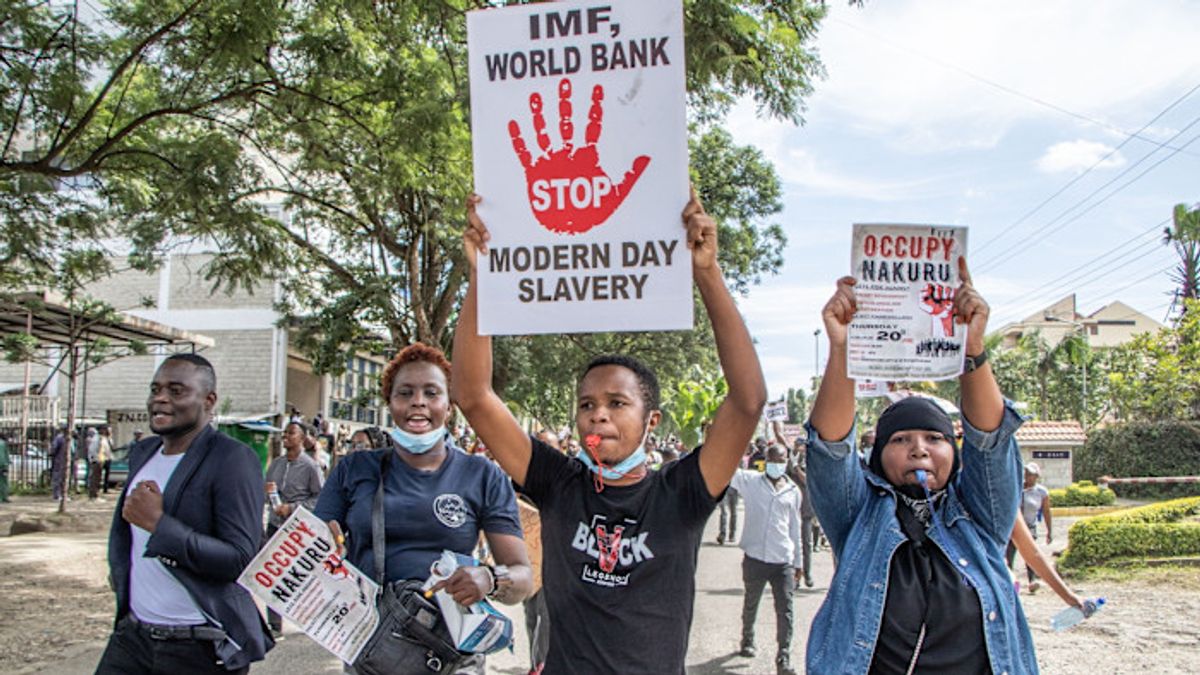
The movement explicitly challenges Kenya’s subjugation to international financial institutions. The Finance Bill was designed to meet International Monetary Fund requirements under a $3.62 billion program demanding increased revenue through austerity. Protesters carried placards reading “IMF, World Bank, Stop the Modern Day Slavery,” recognising these institutions’ role in perpetuating economic extraction. With Kenya spending more on debt servicing than all other budget items combined in 2023, the protests represent resistance to what scholars term “re-colonisation through debt.”
The systemic issues protesters confront are staggering: Kenya loses $6 billion annually to corruption, 73% of citizens face severe financial distress, and only 1% of youth attend university. Land ownership patterns retain colonial characteristics, with resource extraction disproportionately impacting rural communities while benefits flow to elites. These structural inequalities fuel the movement’s demands for fundamental transformation rather than cosmetic reforms.
Current state of sustained resistance
As of July 2025, the movement maintains remarkable resilience despite brutal repression. Operating through a deliberately leaderless structure, protesters coordinate via social media platforms, particularly TikTok and X (Twitter), where #RejectFinanceBill2024 generated over 1.8 billion impressions. The government has responded with escalating violence, media blackouts, internet restrictions, and mass arrests—over 485 people detained on June 25, 2025 alone.
The movement’s demands have crystallised around several key points: “Ruto Must Go”, police accountability, anti-corruption measures, economic justice, among others. Despite government concessions including withdrawing the original Finance Bill and dismissing the cabinet, protesters recognise these as insufficient responses to systemic problems. The anniversary protests on June 25, 2025, which saw 16 killed and over 400 injured, demonstrated the movement’s institutional staying power.
International solidarity and the anti-colonial imperative
International support has emerged from multiple quarters, though with notable contradictions. The African Forum and Network on Debt and Development (AFRODAD) issued a statement condemning “punitive and regressive measures” serving “only to appease creditors.” The African Commission on Human and Peoples’ Rights demanded respect for protest rights and criticized unfettered government access to financial records. Diaspora communities organized protests in Washington, London, Berlin, and other cities, while Pan – Africans such as Julius Malema and Bobi Wine expressed solidarity.
However, Western governments’ expressions of concern ring hollow given their continued funding and training of Kenya’s security forces. The most egregious example of this hypocrisy occurred on July 1, 2025—just six days before the deadly Saba Saba commemorations—when UK Prime Minister Keir Starmer welcomed President Ruto to 10 Downing Street to sign the “Kenya-UK Strategic Partnership 2025-2030.” While Kenyan youth were being killed and disappeared for demanding democratic accountability, the UK government was celebrating a £1.5 billion investment deal focused on trade, security cooperation, and migration control to “prevent onward migration to Europe.”
This timing reveals the true priorities of Western governments: profits over people, stability for capital over democratic rights. The UK’s willingness to host and legitimize a leader actively suppressing his own people exposes the hollowness of British claims about supporting democracy and human rights. The partnership’s emphasis on security cooperation is particularly sinister, as it potentially includes further training and equipment for the very police forces killing protesters. This contradiction highlights the need for genuine anti-colonial solidarity that challenges not just symptoms but the structures of exploitation. UK-based organizations have particular responsibility given Britain’s colonial legacy and ongoing economic ties that perpetuate extractive relationships.
The courage of Kenya’s youth and the path forward

Kenya’s Gen Z protesters demonstrate extraordinary courage in confronting a violent state apparatus that has killed over 80 people since June 2024. Their sophisticated analysis linking immediate economic grievances to colonial structures, their innovative use of technology for organization, and their transcendence of ethnic divisions represent a new model of African resistance. As one protester stated, “We are the people, and they’re supposed to listen because of the power of the people.”
The movement’s significance extends beyond Kenya’s borders, inspiring similar youth-led protests in Uganda and Nigeria. It represents a generational awakening to the need for fundamental transformation of post-colonial African states that continue serving elite and international interests over citizen welfare. For organisations committed to social justice and anti-colonialism such as the Racial Justice Network , supporting Kenya’s protesters means recognising their struggle as part of the global fight against systems of oppression rooted in imperial domination.
Donate for solidarity
Related Articles
One Year After Dr Pious Nyandoro: The Uncomfortable Truth About Empire, Borders and the Value of Black Life
23/07/2026 • Boucka Koffi
Press release: Afro-Diasporic Futures: Black Women’s Leadership Across the Atlantic
04/05/2026 • Iris Dixon